San Antonio Location:
EPIOXA®: A New Way to Treat Keratoconus
FDA-Approved, Epithelium-On Corneal Cross-Linking
Protecting your vision starts with protecting your cornea.
If you've been diagnosed with keratoconus, you may have noticed blurry vision, frequent prescription changes, or difficulty seeing clearly at night.
EPIOXA is an FDA-approved, epithelium-on corneal cross-linking treatment designed to slow or halt the progression of keratoconus—without removing the cornea's outer protective layer.
For eligible patients ages 13 and older, EPIOXA offers a new option for managing this progressive eye condition.
What Is Keratoconus?
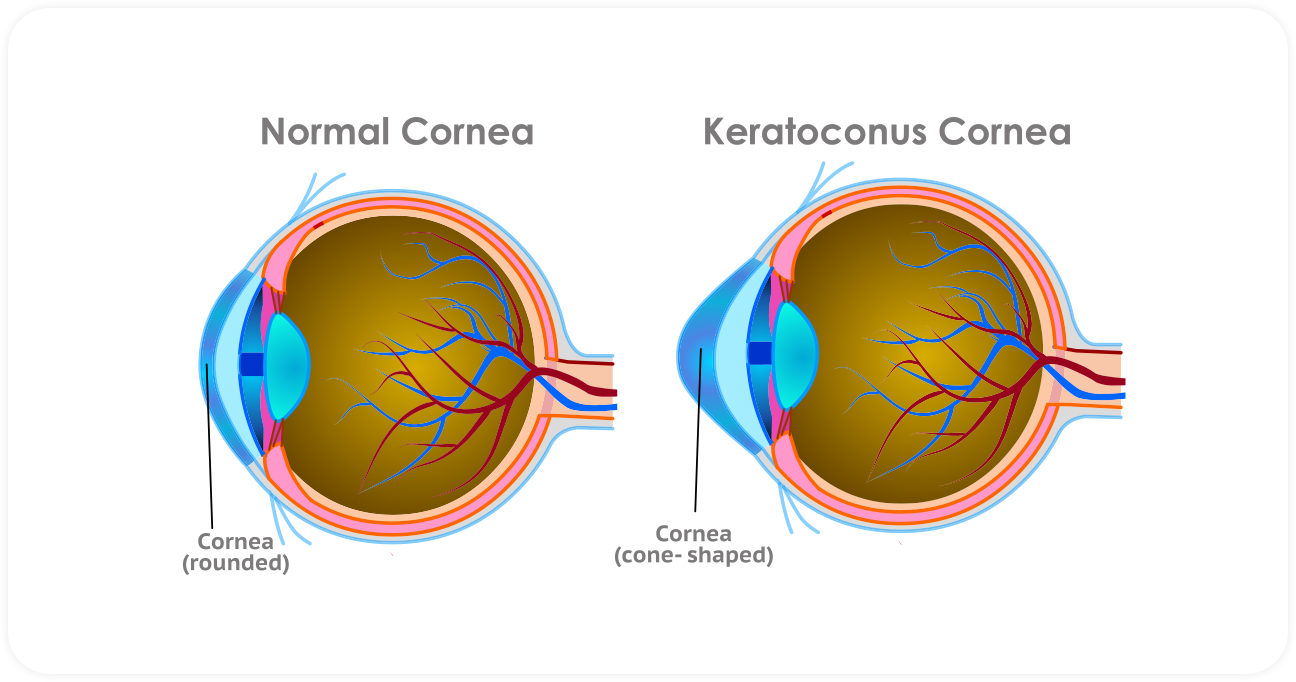
Keratoconus is an eye condition that causes the cornea—the clear, front surface of your eye—to gradually become thinner and develop a cone-like shape.
As the cornea changes shape, light doesn't focus properly, making your vision blurry or distorted.
Common symptoms include:
Blurry or distorted vision
Increasing astigmatism
Glare and halos around lights
Double or ghosted images
Frequent changes in glasses prescriptions
Difficulty seeing clearly at night
Keratoconus often develops during the teenage years or early adulthood, but it can continue progressing later in life.
Why early treatment matters: Glasses and contact lenses can help you see more clearly, but they don't stop keratoconus from progressing. Corneal cross-linking is designed to stabilize the cornea and help prevent further changes.
What Is EPIOXA and How Does It Work?
EPIOXA is an FDA-approved treatment used with a specialized corneal cross-linking system to strengthen the cornea and slow or halt keratoconus progression.
The procedure combines three components:
1. Riboflavin Eye Drops
Specially formulated vitamin B2 eye drops are applied to the cornea while its outer layer remains intact.
2. Supplemental Oxygen
Boost Goggles® deliver additional oxygen to support the cross-linking process.
3. Controlled UV-A Light
The O2n™ System delivers controlled ultraviolet light, activating the riboflavin and promoting additional collagen cross-links within the cornea.
These cross-links help strengthen and stabilize the cornea.
The goal isn't to replace your glasses or contacts. It's to help keep keratoconus from getting worse.
How Is EPIOXA Different From Traditional Cross-Linking?
Traditional corneal cross-linking typically requires removing the cornea's outer layer, called the epithelium, before treatment.
EPIOXA leaves that protective layer intact.
EPIOXA (Epi-On)
Keeps the corneal epithelium intact
Designed for greater patient comfort
May support a faster recovery
Uses supplemental oxygen and a specialized treatment system
Traditional Cross-Linking (Epi-Off)
Traditional Cross-Linking (Epi-Off)
Requires removal of the corneal epithelium
Involves healing of the removed outer layer
May cause more discomfort during recovery
Is also an established treatment for keratoconus
Both treatments aim to slow or halt keratoconus progression. Your eye doctor can help determine which approach is appropriate for your eyes.
What Do Clinical Studies Show?
EPIOXA was evaluated in two pivotal Phase 3 clinical studies involving 591 eyes affected by keratoconus.
Researchers measured changes in corneal curvature to determine how effectively treatment could stabilize the cornea.
The studies demonstrated a statistically significant treatment effect, supporting EPIOXA's effectiveness in treating keratoconus.
Encouraging Results for Younger Patients
In a pediatric subgroup analysis, researchers reported:
• 7.9 letters gained: Average improvement in best spectacle-corrected vision in EPIOXA-treated eyes at six months.
• 2.4 letters lost: Average change in the sham/placebo group over the same period.
• 2.0 diopters: Reported average reduction in maximum corneal curvature (Kmax) in the treated subgroup.
These findings suggest that EPIOXA can help stabilize the cornea in younger patients. Some
patients may also experience improvements in vision, although results vary.
What About Long-Term Results?
In an extension study involving 36 eyes, researchers observed that corneal flattening was maintained through 30 months
after treatment.
This provides encouraging longer-term evidence of a sustained treatment effect in the patients studied.
These results describe clinical trial populations and specific subgroups. They do not guarantee an individual patient's outcome.
Who Is a Good Candidate for EPIOXA?
You may be a candidate if you:
Have been diagnosed with keratoconus
Are 13 years old or older
Meet the corneal thickness and safety requirements for treatment
Are considered eligible following a comprehensive eye examination
Your doctor will evaluate your corneal shape, thickness, and overall eye health to determine whether EPIOXA is right for you.
What Is Recovery Like?
Because EPIOXA leaves the outer layer of the cornea intact, the treatment is designed to improve comfort and reduce some of the recovery challenges associated with traditional epithelium-off cross-linking.
You may still experience temporary irritation, redness, light sensitivity, or other symptoms after treatment.
Recovery varies, and your eye doctor will provide instructions about follow-up care, activities, and when you can resume wearing contact lenses.
Are There Side Effects?
Like any eye procedure, EPIOXA has potential risks and side effects.
In clinical studies, the most commonly reported side effect was eye redness, occurring in approximately 31% of treated eyes.
Other reported side effects included:
Light sensitivity
Eye irritation or discomfort
Increased tearing
Dry eye
Corneal haze
Eyelid swelling
Temporary changes in vision
Some additional adverse reactions were reported, and not every patient is eligible for treatment.
Your doctor will discuss the full safety information with you before proceeding.
Frequently Asked Questions
Is EPIOXA FDA-approved?
Yes. EPIOXA is used as part of an FDA-approved epithelium-on corneal cross-linking system for keratoconus in patients ages 13 and older.
Will EPIOXA improve my eyesight?
The primary goal of EPIOXA is to stabilize the cornea and slow or halt keratoconus progression. Some patients in clinical studies experienced improved vision, but improvement is not guaranteed.
Will I still need glasses or contacts?
You may. EPIOXA treats the progression of keratoconus, while glasses and specialty contact lenses help correct vision.
Is EPIOXA the same as LASIK?
No. LASIK is designed to correct refractive errors by reshaping the cornea. EPIOXA is designed to strengthen and stabilize the cornea in patients with keratoconus.
Can teenagers receive EPIOXA?
Yes. Eligible patients ages 13 and older may receive treatment.
Does insurance cover EPIOXA?
Coverage depends on your insurance plan. Eligible commercially insured patients may qualify for the EPIOXA Copay Program, subject to program terms and restrictions.
Take the Next Step Toward Protecting Your Vision
Keratoconus can continue progressing even when symptoms seem manageable.
With early diagnosis and the right treatment plan, you can take a proactive approach to protecting your corneal health.
Find out whether EPIOXA may be right for you.

Our Locations
Hill Country Dr. Location:
Water Street Location:
Pearsall Location:
Uvalde Location:
© 2026 Mission Cataract and Lasik. All rights Reserved. Accessibility Statement - Privacy Policy - Sitemap
Powered by:
